

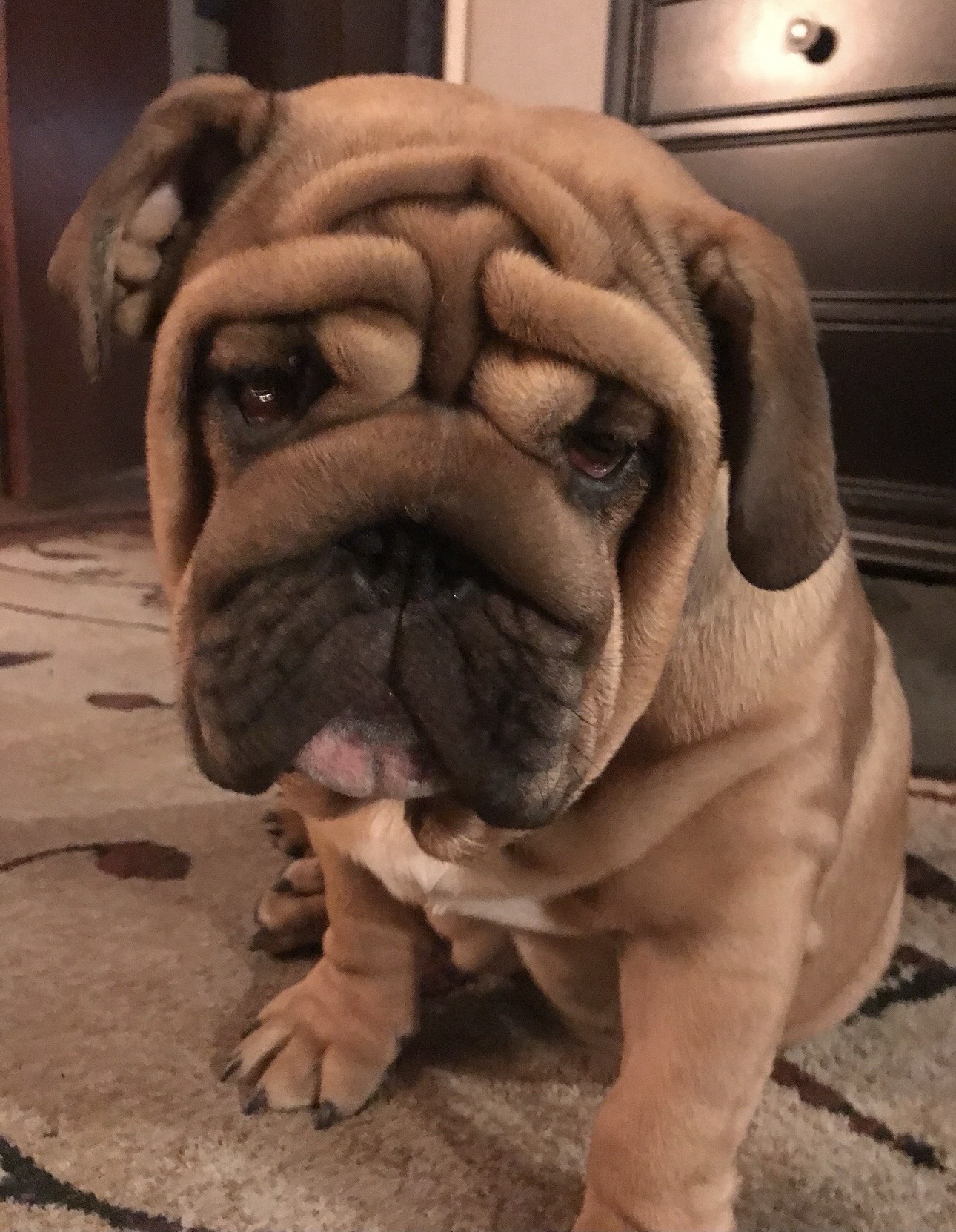
A Real Breeder’s Guide to Catching Problems Early
Bulldogs are not fragile. They are strong, stubborn, hilarious little powerhouses wrapped in wrinkles. But their bodies need owners who pay attention. I tell my families this all the time: What you put into your bulldog is what you get out of your bulldog. An ounce of maintenance will save you hundreds, sometimes thousands, in the long run.
The biggest mistake new bulldog owners make is waiting too long to act. With this breed, the early signs matter. Let me show you what to look for long before anything becomes a crisis.
Start With Learning Your Bulldog’s Baseline
You cannot spot a problem if you do not know what “normal” looks like for your dog.
That means paying attention to:
• Their breathing when they are relaxed
• Their usual poop (yes, really)
• Their typical energy levels
• How they walk, how they sleep, and how they act every day
I pick up poop in my yard daily. I poke it with a stick. I look at consistency, color, and anything unusual. You do not need to perform a science experiment, just pay attention. If something looks “off,” don’t ignore it.
Your bulldog spends more time with you than anyone else. If your gut says something is wrong, listen.
Breathing Changes: Your First Big Warning Sign
Bulldogs snore and snort. That’s normal.
What is not normal is when that breathing suddenly changes.
If your bulldog is:
• Panting heavily while resting
• Hacking or coughing in their sleep
• Struggling after a short walk
• Turning blue around the gums
…that is your sign to call the vet immediately.
Bulldogs are wrinkly on the outside and wrinkly on the inside, too. Soft palate issues are common, and every bulldog should have their palate checked while they are under anesthesia for their spay or neuter. If it needs trimming, do it then so they do not need a second surgery later.
Two quick cooling tricks every bulldog owner should know:
1. Break down phlegm with a lemon
Bulldogs get frothy, thick phlegm when they get overheated. Cut a lemon, let your bulldog lick it for a second. The phlegm breaks down instantly.
2. Use hydrogen peroxide on the nose and paw pads
A little on a cotton ball cools them fast if they are overheating. If breathing ever changes out of nowhere, do not wait for it to improve. Get help.
Overheating Happens Fast — Even on Mild Days
Here in Florida, humidity hits harder than heat. A breezy 75-degree day can still be too much for a bulldog.
Signs of overheating include:
• Bright red gums
• Excessive drooling
• Heavy panting
• Vomiting
• Diarrhea
• Lethargy or collapse
Bulldogs are indoor dogs for a reason. Keep them inside during peak heat and always have a cooling plan for outings. Cooling mats and cooling vests are must-haves, and we’ll have both available in our store during summer months.
Skin Issues Start Small and Explode Fast
Bulldog skin escalates quickly. A tiny irritation can turn into a full-blown infection within days.
Hot spots usually start as a small bald patch that looks irritated. If you catch it early, it is easy to manage. If you wait, it gets red, oozy, painful, and miserable for your dog.
In my house, I use:
• Nootie Antimicrobial Wipes
• Scouts Honor Probiotic Hot Spot Hydrogel
Our girl Gaia gets hotspots sometimes and even gets little toe-bean cysts. The hydrogel and Nootie wipes work on both, and that’s why they’re in my store.
And please do not forget the tail pocket. If your bulldog looks like they’re dancing, scooting, air-licking, or acting oddly cute… they’re probably uncomfortable. Tail pockets trap sweat, dirt, grass, and bacteria. Clean them regularly or infections happen fast.
Ear Issues Start Quietly
Most bulldog ear infections begin with small changes that are easy to miss.
Watch for:
• More head shaking
• Scratching the ears
• A slight head tilt
• A yeasty smell
I use Silver Honey Rapid Ear Care Wipes weekly for maintenance and the Silver Honey Ear Rinse when things look worse. Pour the liquid in, massage behind the ear, let them shake, then wipe away the debris.
Never stick anything into the ear canal. Clean only what you can see.
Eye Problems Need Fast Attention
Bulldogs’ big, beautiful eyes are both their charm and their challenge.
Here’s what to look out for:
Cherry Eye
It looks like a red bubble in the corner of the eye. Needs vet care.
Dry Eye
Redness, crustiness, squinting, or constant discharge. Needs medication to prevent long-term damage.
Entropion
This is when the eyelid rolls inward and eyelashes rub the eyeball.
Signs include:
• Squinting
• Pawing
• Irritation
• Refusing to open the eye
If you gently lift the eyelid and it rolls right back inward, that is entropion. Ignore it, and your dog can end up with scratched corneas or infections. Imagine having a row of eyelashes stuck in your eye. Awful. Take care of it right away.
Stomach and Digestive Drama
Bulldogs are pretty dramatic in the stomach department, so pay attention early.
My baby girl Ziva recently showed signs of a UTI. Her urine looked off and she needed to go more often. We used the Nootie Cranberry + D-Mannose from our store to support her and it worked beautifully because we caught it early.
When vomiting or diarrhea happens:
• One vomit: check what they threw up, maybe add a little pumpkin.
• Soft stool once: normal. Offer bone broth, white rice, and mashed veggies.
• Repeated vomiting or foul-smelling diarrhea: call the vet.
Bloat is an emergency. Always.
I lost a puppy from a previous home due to bloat. It happened in two hours. If your bulldog is panting, drooling, restless, has a tight belly, or is trying to vomit but nothing comes out — go to the emergency vet immediately.
Joint and Mobility Issues
Bulldogs carry a lot of weight in the front of their bodies, and that stress adds up over time.
Our senior girl Miss Bailey is 12 and has normal stiffness for her age. But a younger bulldog limping repeatedly is concerning.
Signs to watch:
• Struggling to stand
• Hesitation to jump
• Favoring a specific leg
• Slowing down suddenly
If you suspect joint issues, get X-rays. Supplements like NuVet can help support joints and ligaments before problems become severe.
Allergies Show Up in All Kinds of Ways
If your bulldog seems itchy or irritated, look at their food first — especially if it contains chicken. Chicken is the biggest allergy trigger I see in bulldogs. Avoid it completely.
Allergy symptoms can include:
• Red paws
• Licking feet
• Ear infections
• Face rubbing
• Tear staining
• Soft stools
Some bulldogs also have seasonal allergies, just like humans. If that is your dog, follow the Bulldog Grass Allergy Wash Routine we already created..
Behavior Changes Often Mean Something Hurts
Bulldogs do not get grumpy for no reason. When they act “off,” they’re speaking to you.
Our girl Persephone became snappy, pulled away from the other dogs, and didn’t want anyone touching her. At first I thought she was being moody, but she was actually feeling awful. Pain shows up as behavior long before it shows up as obvious symptoms.
Watch for:
• Irritability
• Hiding
• Pacing
• Not wanting to be touched
• Sleeping more
• Avoiding other dogs
Your bulldog is communicating. You just need to listen.
You Know Your Bulldog Better Than Anyone
At the end of the day, bulldog health is about paying attention. Small changes matter. Early signs matter. Your gut matters.
If something feels off:
• Watch closely
• Take notes
• Record videos
• Act sooner rather than later
Your bulldog depends on you to recognize the early signs before they hit hard. And when you do, you give them the long, comfortable, wrinkly life they deserve.