

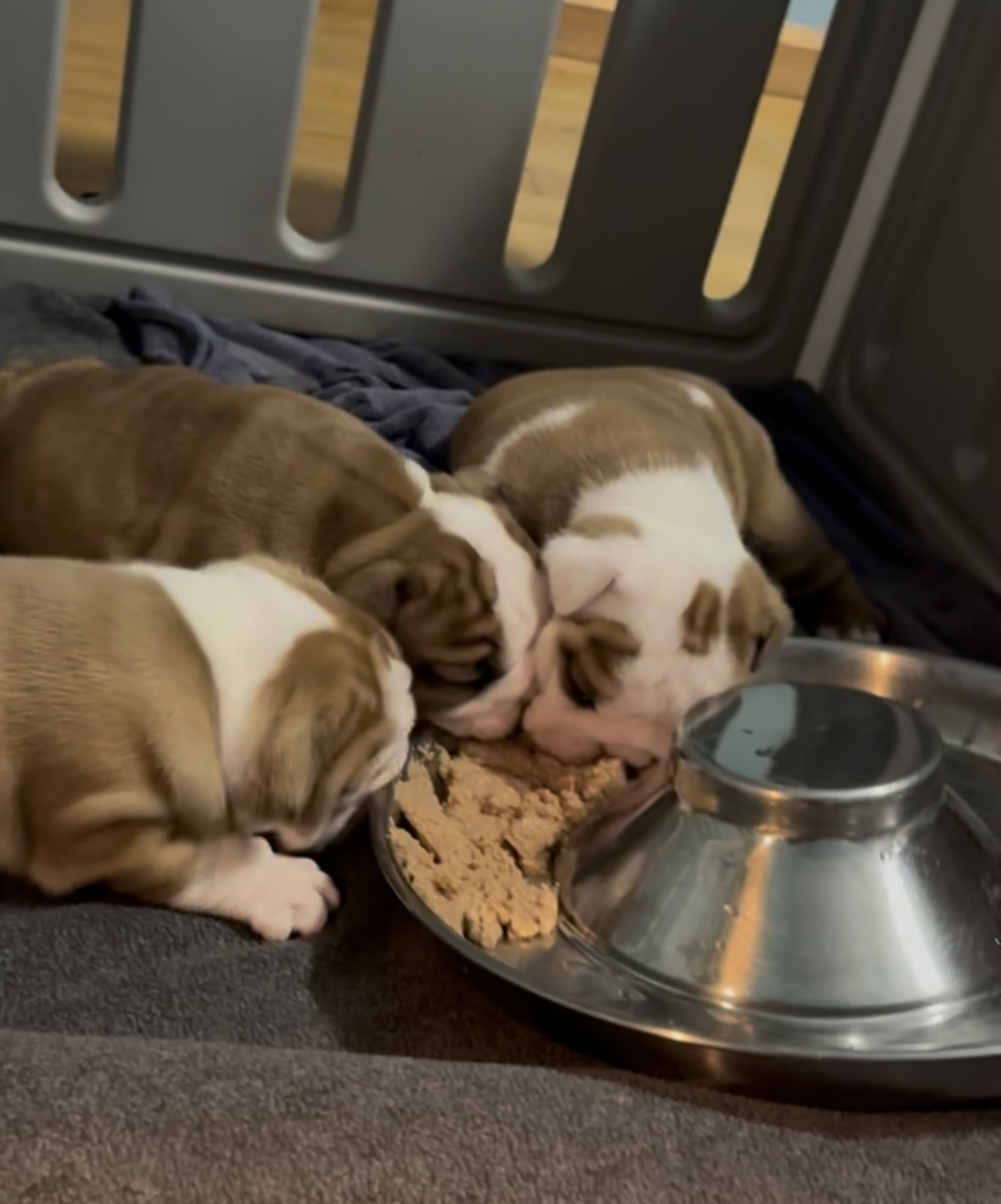
Your bulldog is staring at you with those eyes. You know the ones. The “I am starving even though I ate 20 minutes ago” look that Bulldogs have absolutely perfected. These chunky babies will lie straight to your face about being hungry. Venus does it every day. She will leave her room, swing back in, grab a giant mouthful of kibble and trot off like she’s packing herself for lunch.
Here’s the truth behind real English bulldog feeding tips. Feeding these thick little comedians is not just about putting food in a bowl. It is about routine, ingredients, digestibility and understanding how their bodies work period a solid bulldog meal plan keeps their energy steady and their stomachs calm period get it right and you have a happy, thriving bulldog. Get it wrong and you’ll be dealing with stomach issues, weight gain and a miserable dog.
Split Those Meals up
Bulldogs do not eat… they vacuum. One big meal can turn into gulping, gas, unnecessary discomfort and bloat. Smaller steady meals keep everything moving the way it should. I personally free feed my Bulldogs. I find that always having food available reduces panic eating and food aggression. But not every home works like mine. If your household uses set feeding times, stick with the two or three smaller meals a day at the same times every day Bulldogs love predictability and their digestion works better when their schedule Is consistent.
Protein comes first
Protein is the foundation of a healthy bulldog diet. Always check that the first ingredient on the label is real meat. Beef, fish, lamb, bison are all great options. Skip the chicken because it is one of the most common bulldog allergens. Avoid anything that lists byproducts, fillers or mystery meals.
Bulldogs are thick, muscular dogs that carry most of their weight low and wide. They need quality protein to support that structure. Aim for a food that is at least 25% protein. A solid kibble like taste of the wild with grains and included works well for most Bulldogs if you would like to go cleaner or fresher We Feed Raw is also a great option. The best choice is the one that fits your dog, your home and your budget.
I always tell our bulldog families what you put into your bulldog is what you will get out of your bulldog. You will see the difference when the food and protein is right. Their coat looks healthier, their skin stays clear, and their energy stays steady throughout the day.
Watch those calories like a hawk
Bulldogs can gain weight faster than you expect. Their slower metabolism and thick structure make extra pounds dangerous. Even a small amount of extra weight puts more stress on their breathing and their joints.
Most adult Bulldogs fall somewhere around 1200 to 1400 calories a day, but that number is not exact for everyone. Some Bulldogs are thicker or shorter, some carry more muscle. The best way to check is simple. Feel their ribs. You should be able to feel them without pressing hard, but you should not be able to see them.
If your dog is getting a little chunky, reduce meals by about 10% for a couple of weeks and reassess. If they are staying lean, energetic and moving well, you are most likely right at the sweet spot.
Slow down the eating frenzy
Bulldogs eat like they’re trying to set a world record. When they inhale food, you risk choking, vomiting, uncomfortable gas and bloat.
Slow feeders help by forcing them to work around the food instead of inhaling it. Stainless steel, like our Messy Mutts Dog Bowl Stainless Steel slow feeder, is the safest option because it does not trap bacteria and cannot be chewed into pieces. However whether you go stainless steel or composite like our Messy Mutts Dog Slow Feeder it’s important for your slower feeder to be all one piece so it stays in place, which matters a lot if you have a bulldog who likes to throw their weight around during meal time.
Keep fresh water always available
Bulldogs overheat easily because of their short muzzle, compact airway, and nose folds covering the tops of your nose. Most people do not realize that dogs sweat out of their paws and their noses. A large nose rope can actually block airflow across the nose and make it harder for them to cool down. Therefore, water is not optional for this breed. It is essential. Change their water at least twice a day. Keep bowls and different areas of your home. Make sure they drink after walks, after play and after meals. Dehydration can sneak up fast on Bulldogs their skin loses elasticity, their energy drops and they struggle to cool down. Clean, fresh water is just as important as clean, fresh food.
Add some healthy extras
A few simple add-ins can support digestion and keep calories under control.
• Super Snouts Dog Super Pumpkin Latte 5Oz Great for fiber and helpful for mild digestive irregularities.
• Pro-Treat Freeze Dried Dog Treats Beef Liver Great single ingredient treat, rich in protein and preservative free.
• Pure Vita Dog Treat Skin & Coat Salmon Protein rich, Omega 3 & 6 fatty acids and a great source of L-Carnitine.
Keep extras and treats simple and clean. Bulldogs do best with straightforward ingredients.
Know what to avoid completely
Food sensitivities are common in Bulldogs. Chicken, certain grains, like corn, wheat or soy, can cause issues for some dogs, but not all. Pay attention to scratching, licking or ear infections, and consider the food as a possible cause.
Avoid artificial colors and chemical preservatives. Look for natural preservatives like mixed tocopherols, which are basically vitamin E. Never feed seasoned table scraps. Garlic, onions, salty rubs and heavy fats can cause serious problems for Bulldogs. Stick to clean, consistent food. Their stomachs do best when nothing surprises them.
Do not feed your bulldog right before or right after exercise. Their airway, stomach and digestion all need time to settle. One of the most serious and often fatal emergencies a bulldog can face is bloat. Bloat happens when the stomach fills with gas and can twist on itself. When that twist happens, blood flow is cut off, and the dog cannot release the gas. Their stomach swells breathing becomes harder, and you may see gagging and unproductive vomiting and signs of panic or collapse.
Feed at least an hour before walks or play. After exercise, give them about 30 minutes to cool down before offering food. This simple timing helps prevent bloating and keeps digestion smooth.
Monitor and adjust as they age
Bulldogs need change overtime. Puppies need more calories and more frequent meals. Adults settle into a steady routine. And seniors need fewer calories but better quality nutrition to maintain muscle.
Watch your Bulldogs weight, coat, energy and overall mood. They will tell you what is working. Adjust portions, try different protein sources and keep track of what makes your dog thrive.
Your Bulldogs diet affects their entire life. Keep it simple, keep it consistent and choose foods that support their health from the inside out. When you get the basics right, you will see it how they move how they look and how they feel every single day.