

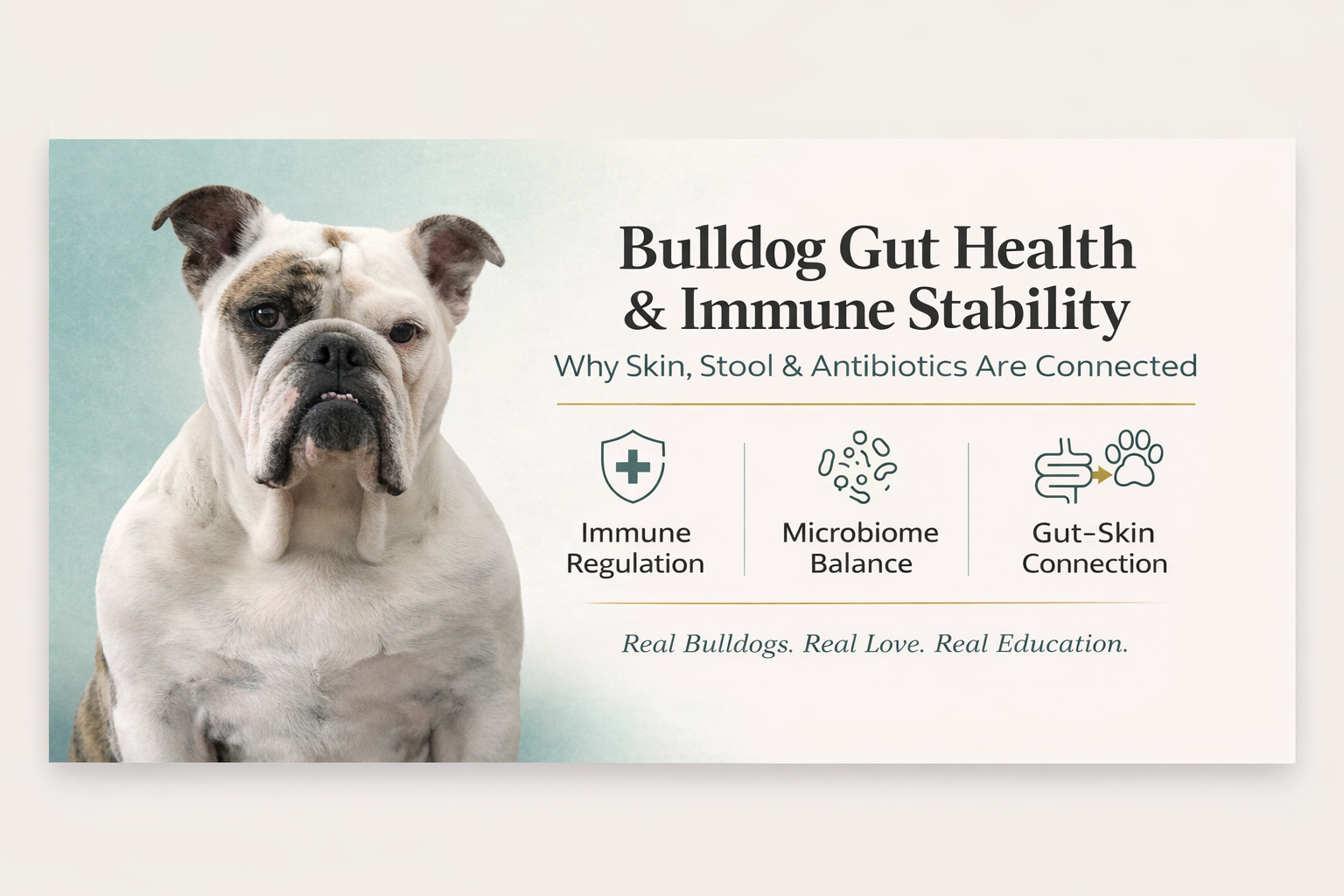
What the Science Tells Us About Skin, Stool, Antibiotics, and the Immune System
When families reach out about chronic skin problems, recurring diarrhea, or unexplained vomiting, the story is often familiar. Foods have been switched. Supplements have been tried. Medications may help temporarily, but the symptoms return — sometimes in a slightly different form.
What often goes unaddressed in these conversations is the role of the gut. Not as a trend or buzzword, but as a biological system that directly influences immune regulation, skin health, and long-term stability inside the body.
To understand why some dogs struggle with recurring issues, we have to stop thinking of digestion, immunity, and skin as separate systems. They are deeply connected.
The gut is one of the body’s primary immune regulators
In dogs, a large portion of the immune system is associated with the gastrointestinal tract. This network, known as gut-associated lymphoid tissue (GALT), plays a central role in immune education — teaching the body what to tolerate and what to respond to.
When the gut environment is healthy, immune signaling is regulated rather than reactive. Inflammation stays controlled, and tolerance to food and environmental exposures is maintained. When that balance is disrupted, immune responses can become exaggerated. Inflammation increases, and symptoms may appear far beyond the digestive tract.
This is why modern veterinary medicine considers gut health foundational when evaluating chronic inflammatory conditions, including skin disease and long-standing gastrointestinal issues.
What dysbiosis actually means — and why it matters
A healthy gut contains a diverse and balanced population of microorganisms that support digestion, nutrient absorption, gut barrier integrity, and immune regulation.
Dysbiosis refers to a disruption in this balance. In practical terms, it means beneficial bacteria are reduced, microbial diversity decreases, and opportunistic or inflammatory bacteria may gain ground.
Research comparing healthy dogs to dogs with chronic enteropathy and inflammatory skin disease consistently shows measurable differences in gut microbiome composition. These changes are not theoretical. They are quantifiable, which is why veterinary medicine developed tools such as the Canine Dysbiosis Index to assess microbial imbalance.
One important consequence of dysbiosis is reduced production of short-chain fatty acids (SCFAs) such as butyrate. These compounds help nourish the intestinal lining and support gut barrier integrity. When SCFA production is reduced, the gut lining can become more vulnerable, allowing immune activation and inflammation to increase.
The gut–skin connection is not coincidence
One of the most consistent findings in canine research is the connection between gut
health and skin health.
Dogs with atopic dermatitis have been shown to have gut microbiomes that differ from
those of healthy dogs. In controlled clinical trials, gut-focused interventions — including
specific probiotic or postbiotic strategies — have been associated with reduced itching,
improved skin scores, and measurable changes in microbiome diversity.
This does not mean gut support cures allergies. What it does mean is that skin symptoms
are often immune symptoms, and immune regulation is heavily influenced by what
happens in the gut.
This helps explain a pattern many owners recognize immediately: dogs with chronic itch
often also experience loose stool, gas, vomiting, or food sensitivities. These symptoms are
connected through immune signaling, not coincidence.
Where antibiotics fit into the gut–immune conversation
Antibiotics are sometimes necessary and life-saving. The issue is not whether antibiotics should ever be used, but how they affect the gut — and what happens afterward.
Antibiotics do not distinguish between harmful bacteria and beneficial bacteria. Even short courses have been shown to significantly alter the canine gut microbiome, reducing bacterial diversity and shifting microbial populations in ways that can persist well beyond the treatment period.
From an immune perspective, this matters. Beneficial gut bacteria play an active role in immune regulation by producing metabolites that support the gut lining and help keep inflammatory responses balanced. When antibiotics reduce these populations, immune signaling can become less stable.
This helps explain a cycle many families experience. A dog develops a skin flare or rash. Antibiotics are prescribed. The rash improves temporarily. Weeks or months later, symptoms return — sometimes alongside digestive upset. The visible symptom quieted, but the underlying regulatory system was never addressed.
Veterinary studies examining dogs with chronic gastrointestinal disease frequently note prior antibiotic exposure as a contributing factor to long-term microbiome disruption. This does not mean antibiotics cause chronic disease on their own. It means they can act as a significant stress event for the gut ecosystem, particularly when used without dietary support, microbiome recovery strategies, or evaluation of underlying immune contributors.
Recognizing this is not anti-veterinary care. It aligns with current understanding of immunemediated disease and supports more thoughtful, long-term management.
Why treating the rash alone is often not enough
Skin is an immune organ. Rashes are often immune signals rather than isolated skin problems.
When antibiotics are prescribed for skin symptoms without evaluating gut health, diet history, or recurring gastrointestinal signs, the root cause may remain untouched. This is why many dogs cycle through flare-ups instead of achieving long-term stability.
Supporting gut health alongside symptom management is not about rejecting medical care. It is about addressing the systems that influence immune behavior in the first place.
Why pumpkin helps — and where its limits are
Pumpkin is commonly recommended for digestive upset, and that recommendation has a clear biological basis.
Pumpkin contains soluble fiber, which helps regulate how water moves through the intestines. In diarrhea, it absorbs excess moisture and firms stool. In constipation, it helps soften stool by normalizing water balance. Soluble fiber also feeds beneficial gut bacteria, supporting the production of compounds that help maintain gut lining health.
Pumpkin can be helpful for mild digestive upset and during dietary transitions. What it cannot do is correct underlying dysbiosis or immune-driven gut disease on its own. It is a supportive tool, not a cure.
Prebiotics, probiotics, and immune support — where they fit
Prebiotics are non-digestible fibers that nourish beneficial gut bacteria and support microbial diversity.
Probiotics are live microorganisms whose effects depend on strain, dosage, duration, and the individual dog’s condition. Research consistently shows they are not one-size-fits-all. Some dogs benefit, others require different or additional strategies.
Because the gut and immune system are so closely linked, immune-support strategies may also play a role in overall regulation. Nutritional immune-support supplements — including products such as NuVet — are designed to support immune balance and recovery during periods of stress. These products are not medications and do not replace veterinary care, but they may complement a broader gut-focused approach when used appropriately.
Why this matters for Bulldogs
Bulldogs are not unhealthy by nature, but they are biologically sensitive. Their structure and genetics can make them more prone to food sensitivities, skin–gut overlap issues, and immune-mediated inflammation.
For this reason, a gut-first perspective is often especially valuable. Supporting the gut helps support the systems Bulldogs rely on most for long-term comfort and stability.
A gut-health reality check
If you’re trying to decide whether gut health may be part of your dog’s picture, consider the following:
- Does your dog have recurring diarrhea, soft stool, or frequent vomiting?
- Do skin issues flare alongside digestive upset?
- Have antibiotics helped temporarily, but symptoms return?
- Have food changes helped for a short time but not long-term?
- Does your dog seem sensitive to stress, diet changes, or environmental shifts?
If several of these feel familiar, the gut may be a meaningful place to focus — alongside, not instead of, appropriate veterinary care.
Final thoughts
Gut health isn’t a trend. It’s a biological foundation.
When the gut environment is supported, immune regulation improves. When immune regulation improves, symptoms throughout the body often become easier to manage. This isn’t about quick fixes or blaming one intervention. It’s about understanding where many chronic issues begin and supporting dogs from the inside out.
Real Bulldogs. Real Love. Real education.
References
- Jergens, A. E., Simpson, K. W. (2022). Chronic inflammatory enteropathies in dogs:
Evolving concepts in diagnosis and management. Frontiers in Veterinary Science,
9, 923013.
https://doi.org/10.3389/fvets.2022.923013 - AlShawaqfeh, M. K., et al. (2017). A dysbiosis index to assess microbial changes in
fecal samples of dogs with chronic inflammatory enteropathy. Journal of Veterinary
Internal Medicine, 31(6), 1819–1827.
https://doi.org/10.1111/jvim.14880 - Minamoto, Y., et al. (2019). Alteration of the fecal microbiota and serum metabolite
profiles in dogs with idiopathic inflammatory bowel disease. Journal of Veterinary
Internal Medicine, 33(2), 613–624.
https://doi.org/10.1111/jvim.15425 - Anturaniemi, J., et al. (2020). The effect of probiotic supplementation on canine
atopic dermatitis and gut microbiota. Veterinary Dermatology, 31(4), 245–e57.
https://doi.org/10.1111/vde.12839 - Bradley, C. W., et al. (2024). Effects of a synbiotic and postbiotic intervention on
pruritus and gut microbiome composition in dogs with allergic skin disease: A
randomized controlled trial. Animals, 14(3), 412.
https://doi.org/10.3390/ani14030412 - Suchodolski, J. S. (2016). Diagnosis and interpretation of intestinal dysbiosis in
dogs and cats. Veterinary Journal, 215, 30–37.
https://doi.org/10.1016/j.tvjl.2016.04.011 - Igarashi, H., et al. (2014). The role of short-chain fatty acids in intestinal barrier
function and immune regulation. Journal of Veterinary Medical Science, 76(6),
769–775
https://doi.org/10.1292/jvms.13-0453 - Langdon, A., Crook, N., Dantas, G. (2016). The effects of antibiotics on the
microbiome throughout development and alternative approaches for therapeutic
modulation. Genome Medicine, 8, 39.
https://doi.org/10.1186/s13073-016-0294-z - Pilla, R., Suchodolski, J. S. (2020). The role of the canine gut microbiome and
metabolome in health and gastrointestinal disease. Frontiers in Veterinary
Science, 6, 498.
https://doi.org/10.3389/fvets.2019.00498 - Marsella, R., et al. (2012). Atopic dermatitis in dogs: Pathogenesis, clinical signs,
and diagnosis. Veterinary Dermatology, 23(6), 393–e77.
https://doi.org/10.1111/j.1365-3164.2012.01096.x