

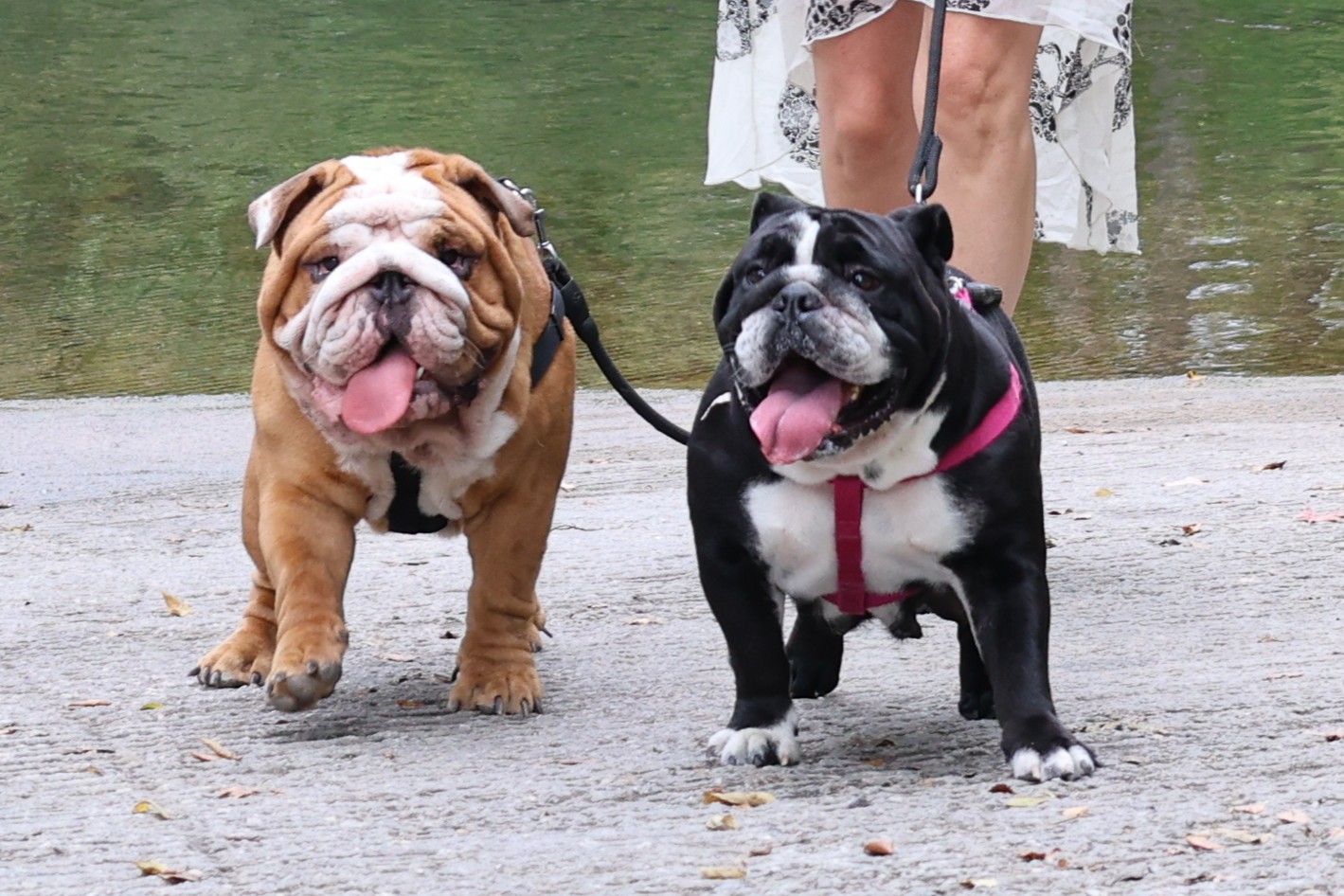
Spring is where a lot of Bulldog owners get it wrong.
It doesn’t feel that hot yet. The mornings are nice. The air still has a little cool to it. So naturally, people start doing more—longer walks, more outside time, a little more freedom.
And on paper, that all sounds like a good thing.
But Bulldogs don’t operate on what feels comfortable to us. They operate on what their bodies can actually handle.
And those are two very different things.
It’s Not About Doing More—It’s About Doing It Right
One of the biggest mindset shifts with this breed is understanding that exercise isn’t about pushing them.
You’re not building endurance the way you would with a high-performance dog. You’re managing a body that already works harder just to breathe, regulate temperature, and recover.
So instead of asking, “How much exercise should my Bulldog get?”
The better question is:
“How do I give my dog movement without putting them in a position where they have to struggle?”
Why Bulldogs Heat Up So Fast
Bulldogs are brachycephalic, which means their airways are shortened and more compact.
That structure limits how efficiently they can move air, especially when they’re panting. And panting is their primary way of cooling down.
So when the temperature rises—or even when it just feels warmer combined with humidity, sun, and movement—they don’t have the same ability to regulate.
They don’t always crash dramatically.
They just… start slowing down. Breathing gets heavier. You might hear that thicker, congested sound. They might lay down earlier than expected.
That’s not stubbornness.
That’s their body telling you it’s working harder than it should.
What Exercise Actually Looks Like in Real Life
For us, this isn’t complicated—but it is intentional.
We don’t do mid-day walks. Ever.
Walks happen before 9 in the morning or after 7 in the evening. That alone changes everything.
Outside time is usually capped around 30 minutes, and even then, we’re not watching the clock—we’re watching the dog.
Because some days, 30 minutes is fine.
Other days, it’s not.
And that’s the difference between routine and awareness.
You Have to Pay Attention to the Subtle Stuff
Bulldogs don’t always give you a big warning.
They don’t always panic or collapse.
They just start to fade.
Maybe they slow their pace. Maybe they stop and sit. Maybe they lay down and don’t feel like getting back up. The breathing gets louder, thicker, a little more “phlegmy.”
That’s your moment.
Not to encourage them. Not to “just finish the walk.”
That’s where you step in and say—we’re done.
Cooling Them Down Is Part of the Routine
This is the part people don’t always talk about, but it matters just as much as the exercise itself.
When our dogs come in, we’re not just letting them settle—we’re actively helping their bodies recover.
We’ll grab a cooling towel, get it wet, and wrap it around the head and ears. You can almost watch them decompress when that goes on.
If their breathing sounds heavier or congested, we’ll add a little lemon juice to their water. It helps break that up so it’s not just sitting in their throat.
We’ll use a small amount of peroxide on the pads of their feet and the tip of the nose to help pull heat out.
And then they go find their spot.
In our house, that’s the floor vents. Every dog has their favorite, and they’ll lay right over it so the cool air hits their chest.
Not everyone has that setup, but the principle is the same—airflow matters.
A fan, AC, moving air in their space… it all helps bring them back down faster.
Not Every Bulldog Has the Same Limits
This is something people don’t always realize until they live with more than one.
Structure matters.
Dogs with heavier wrinkles, tighter faces, or more compressed airways—like Zeus—may fatigue faster and need shorter, more controlled sessions outside.
Even small differences in build can change how quickly they heat up or how fast they recover.
So it’s not about comparing your dog to someone else’s.
It’s about learning your dog.
Rethinking What “Exercise” Really Means
Here’s where most people shift once they really understand the breed—
Exercise doesn’t have to look like a long walk.
Sometimes it’s a short, controlled walk in the right conditions.
Sometimes it’s just time outside to move, explore, and sniff without pressure.
Sometimes it’s interaction, engagement, and mental stimulation that settles them more than physical exertion ever would.
And sometimes, it includes things like swimming—but that’s one area where understanding your Bulldog’s structure, breathing, and safety matters more than anything else.
We’re going to break that down next, because water can either be a great tool… or a real risk if it’s not handled the right way.
The Way We Look at Exercise
At the end of the day, exercise for a Bulldog isn’t about wearing them out.
It’s about giving them movement, stimulation, and routine—without putting them in a position where their body has to fight to keep up.
That might look like a short walk.
It might look like a little outside time and then back in.
It might look like doing less than you think you should.
And that’s okay.
Because when you get this part right, you don’t just avoid problems—you create a dog that’s comfortable in their own body.
And that’s the goal.