

Bulldogs are not high-maintenance in the way most people assume. They don’t need elaborate styling sessions or regular trips to a professional groomer to look and feel their best. What they do need is consistent, routine care from someone who knows their body and their quirks.
Grooming a bulldog at home is doable, practical, and genuinely a good bonding experience once you get the rhythm of it down. Here’s how to do it well, step by step.
Get Your Supplies Together First
Before anything else, gather everything you need in one place. Trying to groom a bulldog while hunting for nail clippers mid-session is not a good time for anyone involved.
A basic at-home bulldog grooming kit includes: a bristle brush or silicone grooming glove, a bulldog-appropriate shampoo and conditioner, facial wipes or grooming wipes, a gentle face wash for the skin folds, nail trimmers or a nail grinder, ear cleaner, and tear stain wipes for the area under the eyes.
Keep it all in one spot. Once you have a system, the routine becomes fast and your dog learns what to expect.
Brushing: Don’t Skip It
Bulldogs have short coats, so brushing often gets skipped entirely. That’s a mistake. Regular brushing removes loose hair, distributes natural oils through the coat, and gives you a chance to check the skin for hotspots, irritation, or dry patches before they become a bigger issue.
How Often to Brush
Two to three times a week is plenty. A silicone grooming glove is a good option because it massages the skin at the same time, and most bulldogs tolerate it well. A large bristle brush gets a little deeper into the coat and works well for full-body sessions.
Go over the entire body, including the chest and belly area. Bulldogs collect more loose fur in their skin folds than most people expect.
Bathing Your Bulldog
Bulldogs don’t need a bath every week. Over-bathing strips natural oils from the coat and skin, which can actually worsen irritation in a breed that’s already prone to skin issues. Every three to four weeks is a solid schedule for most bulldogs, or more often when they’ve been rolling in something they absolutely should not have been near.
Choosing the Right Shampoo
This matters more than most people realize. Bulldogs have sensitive skin and react to fragrances and harsh surfactants easily. Probiotic-based shampoos formulated for dogs with reactive skin are a good starting point. Look for options that include conditioning agents in the same formula so you’re not managing multiple products at once.
For puppies specifically, use a tearless puppy formula. Adult shampoos are often too strong for a young coat and skin.
The Bath Itself
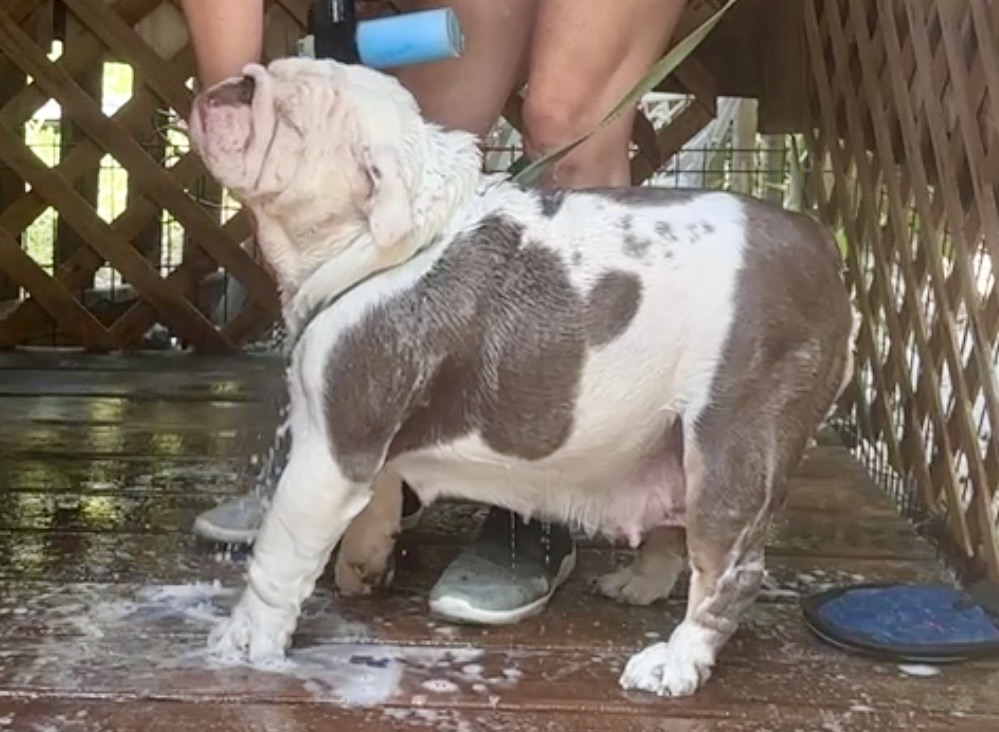
Wet the coat completely before applying any shampoo. Work through the coat in sections: neck, back, belly, legs, and tail. Keep water and soap away from the eyes, nose, and ear canals. Rinse thoroughly because shampoo residue left in the coat causes itching and skin irritation.
After the bath, dry the coat well. Pay close attention to the wrinkle folds because moisture trapped in those areas leads to bacterial and yeast buildup quickly. Use a towel to dry each fold completely, and if your bulldog tolerates a dryer on a low heat setting, that works too.
Wrinkle Care: The Most Important Step
This is the part of bulldog grooming that matters most and gets skipped the most. Wrinkle care needs to happen multiple times a week, not just at bath time.
Cleaning the Folds
Use a grooming wipe or a soft cloth with a gentle solution and clean between every fold on the face, including the rope over the nose. If your bulldog has a tight tail pocket, that area needs attention too. The goal is to remove dirt, debris, and moisture from every crease.
Probiotic-based grooming wipes are a good option here because they support the skin’s natural balance while removing what causes problems. After cleaning, make sure each fold is dry. Wet folds in a warm environment are where infections start.
Ear Cleaning
Bulldogs are prone to ear buildup and infections more than most breeds. Checking and cleaning the ears every one to two weeks prevents small issues from turning into recurring problems.
Use a dog-specific ear cleaner applied to a cotton ball or soft cloth. Never insert anything into the ear canal itself. Wipe along the outer folds and the accessible inner area. If you notice redness, a smell, or a significant amount of dark debris, that’s a vet visit, not something to manage at home.
Nail Care
Long nails cause posture problems and put stress on the joints of a breed that’s already carrying a lot of weight on a short frame. Trim every two to three weeks, or whenever you start hearing clicking on hard floors.
Guillotine-style nail trimmers give the most control for thick bulldog nails. If your dog resists clippers, a palm nail grinder removes nail gradually and is often less stressful for resistant dogs. Before the first trimming session, let your dog get comfortable with the tool itself. Let them sniff it, touch it, hear it, all while they’re calm and not anticipating anything.
Dental & Tear Stain Care
A water-additive dental powder addresses plaque buildup between brushing sessions and is easy to incorporate into a daily routine. For tear stains, which appear regularly in many bulldogs, use aloe-based tear stain wipes under the eyes every few days to keep the area clean and reduce staining over time.
Building the Routine
Grooming a bulldog at home gets easier every time you do it. Start with one session, keep it calm, reward throughout, and build from there. When your bulldog learns the routine, they’ll settle into it, and some will lean in.
Consistency is what keeps the coat healthy, protects the skin, and catches small problems before they become expensive ones. That’s the real point of all of it.